


Toilet Learning vs. Potty Training: A Montessori Approach

By Katelyn Boggs

For many parents, the transition from diapers to underwear marks a significant milestone in their child’s development. But have you ever considered the difference between "potty training" and "toilet learning"? While these terms are often used interchangeably, they reflect two very different approaches to helping children gain independence in their self-care.
Understanding Sensitive Periods for Toilet Learning
In her work with children Dr. Montessori observed something interesting - she noticed that all people have times or stages in their development when they are more responsive to certain stimuli and quicker to learn particular skills. She called this phenomenon a sensitive period. Contrary to popular belief, this “sensitive period” for toilet learning actually begins during early toddlerhood (between 12 - 18 months) and not during later toddlerhood (24+ months). If interested in further reading, check out this article for more detailed info on the stages of the toilet learning sensitive period.

Here at YPM, we invite children to participate in their
own self-care from infancy: we ask them to hold their shirt up, pull their diaper tabs, or make an attempt to wipe (in addition to the guide’s assistance). This nurtures their growing sense of autonomy over bodily functions and helps make the transition to toileting flow more smoothly. Then, in the toddler community, we follow each child’s cues, noting interest and ability, and continually offer opportunities that challenge the limit of their capabilities without being too frustrating.
Recognizing Readiness Signs
Children will often give cues when they are ready to begin toilet learning. Common and sometimes easily-missed toilet learning readiness signs include but are not limited to:
Interest in the bathroom/toilet
Interest in watching others use the toilet
Pulling at diaper tabs/taking off their diaper
Hiding to make a bowel movement in their diaper
Notifying you (verbally or nonverbally) when they have just put something in their
diaper
Staying dry for 2+ hours at a time
Waking from naps dry
Wanting to sit on the potty (even if nothing goes in the toilet)
Wanting to help wipe
Interest in dressing/undressing
Expressing interest in wearing “big boy/girl undies” or “being like mom/dad/brother/sister”
Pointing to and/or touching the bathroom door/doorknob
Interest in flushing the toilet


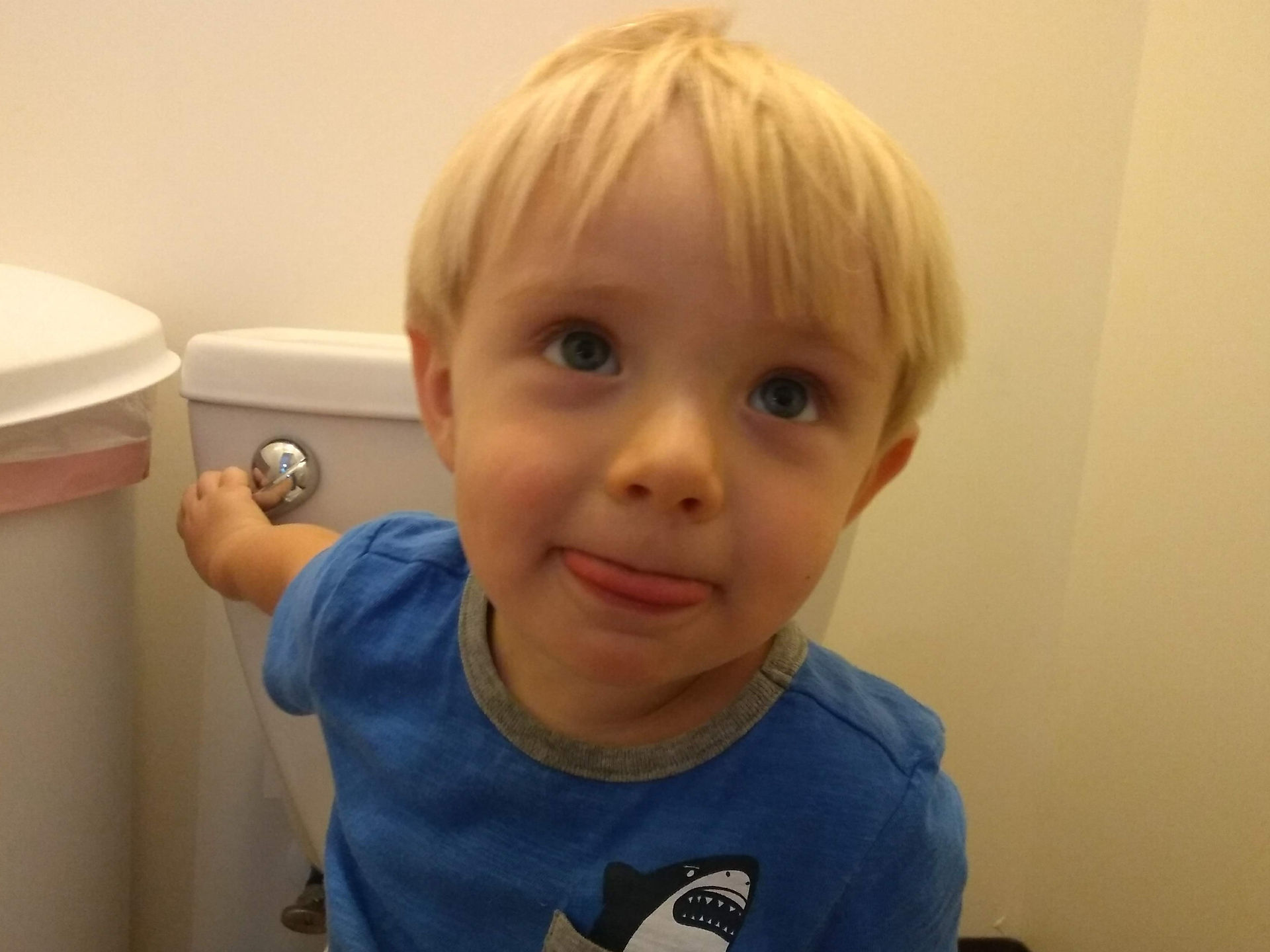
These may occur in any order, only one at a time, or multiple signs at once. It will be easier on the child to begin introducing a toileting routine when the child shows the beginning readiness cues. Learning to use the toilet should be a gradual, natural, low-stress experience. If we can work together to coordinate our efforts during the child’s sensitive period (as opposed to when the caregivers decide it’s time to begin), the chance for the child to have a successful toilet learning experience skyrockets.
The Difference Between Potty Training and Toilet Learning


Potty training is: | Toilet learning is: |
Adult driven | Child-driven |
Extrinsically motivated (adults set up sticker charts, candy rewards, etc.) | Intrinsically motivated (no rewards or punishments – child is motivated simply by their own progress) |
Child is passive participant in “being trained”, like a puppy | Child is active participant in learning to use the toilet, as a human being acquiring a new skill |
Frequent timers/reminders teaching the child to associate the need to use the toilet only when an adult is prompting | Adult asks leading questions like “How does your body feel?" which teaches children to associate toileting with their own bodily cues. |
Accidents are viewed negatively, often involves shaming - adult cleans up | Accidents are accepted as part of the learning process and dealt with calmly and neutrally - child learns to clean up with the adult’s help |
Why Straight to Underwear Instead of Pull-Ups?

Most in our culture today seem to be of the mindset that children are not ready for underwear until they are consistently accident-free. On a child’s first day in underwear, they may only stay dry for an hour before having an accident. Instead of reacting with an; “Oh no! You peed!” and putting the child back in pull-ups the rest of the day, we celebrate; “Hooray! You stayed dry for a whole hour!” Then, nonchalantly, “But oops, pee goes in the toilet, not the floor. Here’s a towel. Please help me wipe this up, then we will get some dry clothes on.”
Tim Seldin explains this beautifully in his book; How to Raise an Amazing Child the Montessori Way:
“Children wearing disposable diapers can rarely sense that they have gone to the bathroom. By wearing underpants, they are much more likely to learn to recognize the sensation when their bladder is full and tend to take pride in using the toilet like a big boy or girl.”
Setting Up for Success
To create an environment that supports toilet learning, consider having:
10-20 pairs of the thick cotton Gerber training underpants (or similar style)
10+ pairs of elastic-waisted, loose-fitting pants/skirts
Extra blankets and sheets for nap time
Water-proof mattress covers for the bed
Reusable water-proof pads for the car seat
Try to avoid the following:
Thin underwear with tight elastic waistbands
Pants with snaps/buttons/zippers
Tight leggings or joggers
Long dresses
Overalls/onesies/rompers
Encouraging Independence with a Positive Approach

Think about how a child learns to walk. When she takes her first wobbly steps and plops down onto her bottom, we don’t rush to discourage her or declare that she isn't ready to walk. Instead, we celebrate her progress and encourage her to keep trying, accepting the fall as part of the learning process. Toilet learning works the same way. Rather than reacting negatively to accidents, we can acknowledge successes (“Wow! You stayed dry for a whole hour!”) and gently assist children in cleaning up any messes to support their learning process.
By respecting a child’s natural development and giving them the tools to succeed, we can transform toilet learning into an empowering step toward independence.

For further reading, try: What Montessori Parents Do Differently - Toilet Learning - how we montessori
Disclaimer: The views and opinions expressed in any articles referenced herein are those of the authors and do not necessarily reflect the philosophy, beliefs, practices, policies, or positions of Yadkin Path Montessori.


Comments